

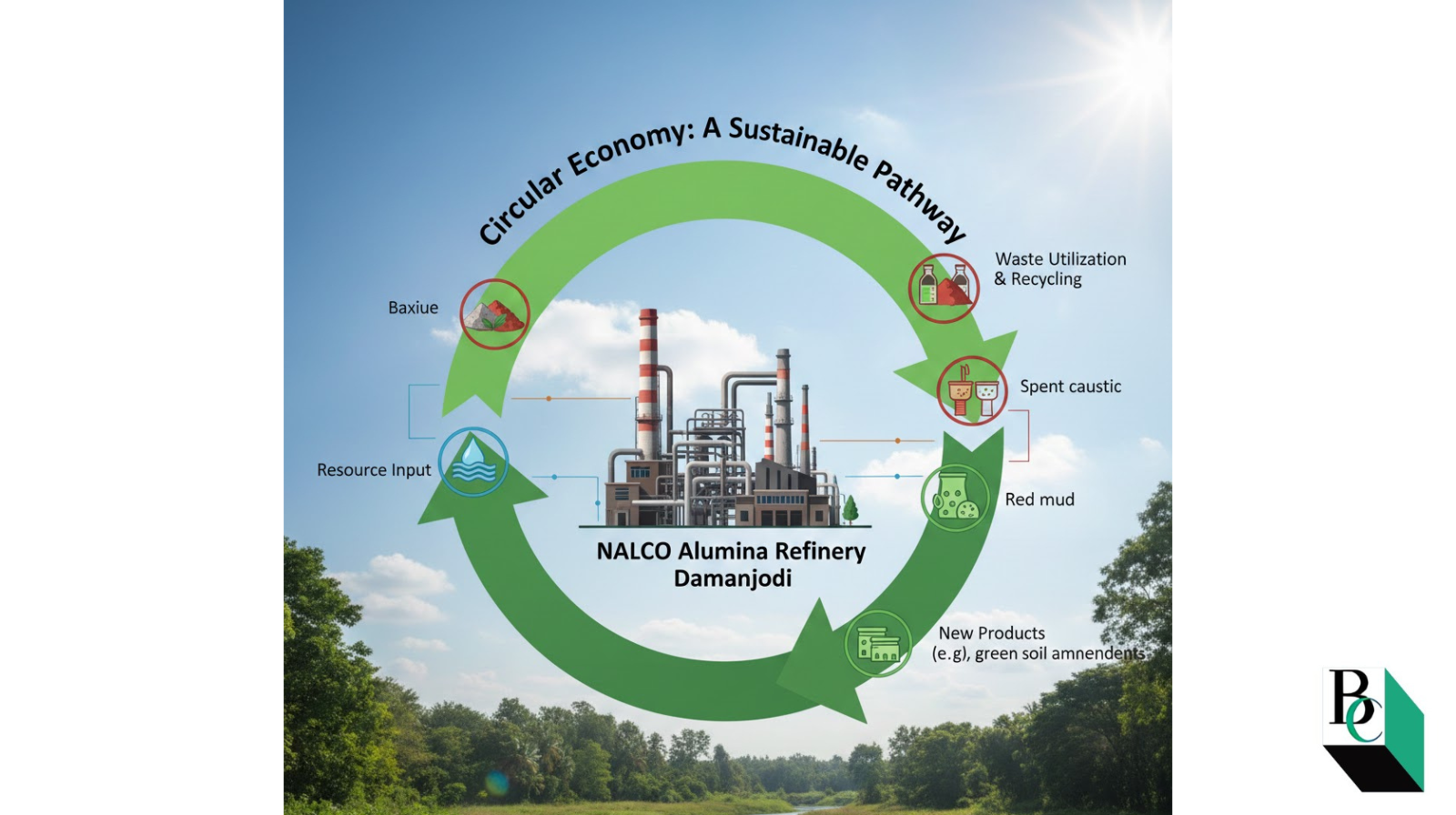
As global industries increasingly focus on sustainability, resource efficiency, and responsible production, the concept of the circular economy has become central to modern industrial strategy. For NALCO Alumina Refinery, Damanjodi, a key producer of high-quality alumina powder in India’s aluminium value chain, adopting circular economy principles is both a responsibility and an opportunity for long-term resilience.
Understanding the Circular Economy of NALCO
The circular economy moves away from the traditional linear model of take – make – dispose and instead emphasises:
Reducing resource use
Reusing materials and components
Recycling waste into valuable products
Recovering resources and energy from by-products
This approach helps industries lower their environmental impact while enhancing efficiency and innovation.

Circular Economy in the Alumina Sector
Alumina refining naturally involves large-scale use of raw materials, water, and energy. It also generates significant by-products. Therefore, the circular economy provides a strong framework for transforming operational challenges into sustainable opportunities.
For a major alumina producer such as NALCO, integrating circularity into everyday operations strengthens both environmental performance and economic competitiveness.
Circular Economy Opportunities at NALCO Alumina Refinery, Damanjodi
- Red Mud (Bauxite Residue) Utilisation
Red mud is the most prominent by-product of alumina production. Under a circular model, it can be transformed into useful materials through:
Cement and concrete manufacturing
Recovery of iron, titanium, and rare earth elements
Production of bricks, tiles, and lightweight construction materials
Turning red mud into value-added products reduces environmental burden and generates new revenue streams.
- Productive Reuse of Fly Ash
Fly ash from captive power operations can be:
Utilised in cement, bricks, and road construction
Supplied to local industries, creating industrial symbiosis
Used in mine backfilling and land reclamation
This reduces disposal requirements and supports sustainable regional development.
- Water Recycling and Circular Water Systems
Water plays a critical role in alumina refining. Strengthening water circularity can include:
Maximising condensate recovery
Reusing treated wastewater for dust suppression, gardening, and other auxiliary purposes
Reducing dependency on fresh water through advanced treatment and recycling technologies
Such measures promote responsible water stewardship for both industry and community.
- Energy Efficiency and Waste Heat Recovery
A circular economy also promotes smarter energy use. NALCO can continue enhancing energy circularity by:
Recovering waste heat from boilers and calcination units
Improving process energy efficiency
Integrating renewable energy sources for non-critical operations
These initiatives reduce emissions and operational expenditure.
- Resource Recovery and Sustainable Supply Chain
NALCO can strengthen circularity through:
Recycling scrap metal, alumina bags, and packaging materials
Implementing proper segregation of recyclable waste
Encouraging suppliers to adopt eco-friendly practices
Promoting a culture of “zero waste at source” within the refinery
This ensures sustainability throughout the value chain.
- Community and Workforce Participation
Circularity thrives when employees, contractors, and local communities are involved.
Training programmes, awareness activities, and partnerships with local bodies can enhance recycling behaviour, resource conservation, and sustainable livelihoods.
Benefits of a Circular Economy at NALCO
Economic Advantages
Reduced the cost of raw materials and utilities
Revenue generation from by-products
Lower expenditure on waste disposal
Environmental Benefits
Reduced emissions and waste accumulation
Conservation of natural resources
Smaller environmental footprint
Social Impact
Creation of green jobs
Strengthened community relations
Enhanced corporate reputation
Conclusion
As a leading producer of alumina powder, NALCO Alumina Refinery in Damanjodi plays a vital role in shaping India’s sustainable industrial future. Adopting circular economy principles empowers the refinery to minimise waste, optimise resources, and innovate continuously.
By embracing circularity, NALCO not only contributes to environmental protection but also sets a national benchmark for responsible, efficient, and future-ready industrial operations.
Read my Blogs on Bicreators Author Profile

